
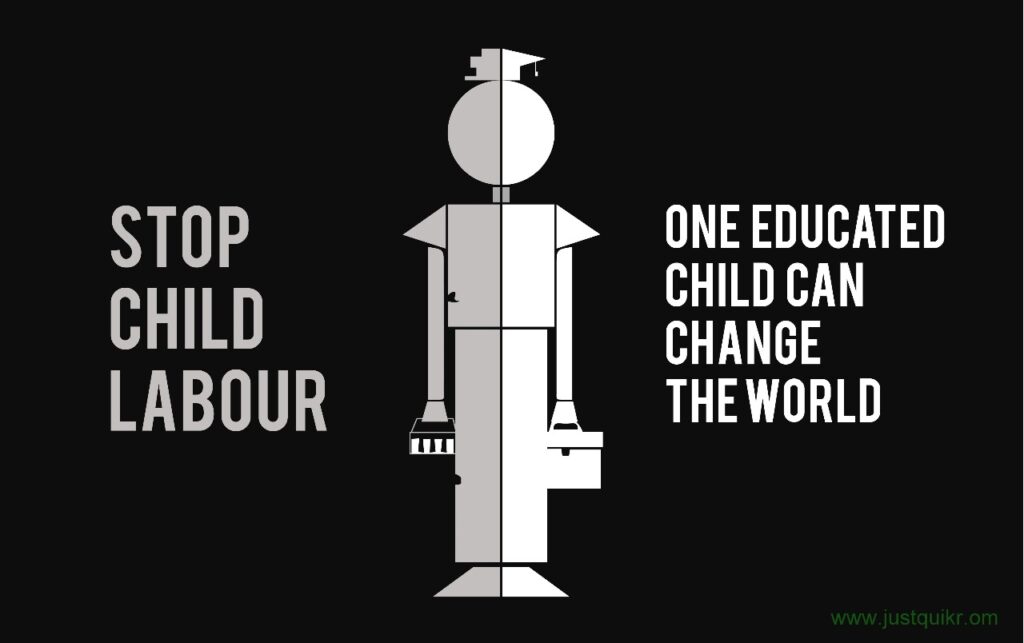
In many parts of the world, childhood is supposed to be a time for learning, playing, and dreaming about the future. But for millions of children, this stage of life is stolen by the harsh reality of child labour. Instead of attending school, they are forced to work in farms, factories, homes, and on the streets—often in dangerous and exploitative conditions.
Understanding the Problem
1. What is Child Labour?
Child labour refers to work that deprives children of their childhood, their potential, and their dignity. It is work that is harmful to physical and mental development, and interferes with schooling.
According to the International Labour Organization (ILO), over 160 million children worldwide are engaged in child labour. A majority of them come from impoverished backgrounds and are caught in the vicious cycle of poverty and lack of education.
2. Why is it a Problem?
- Loss of Education: Children involved in labour rarely attend school, cutting off their access to education and a better future.
- Physical and Mental Harm: Child labourers are often exposed to hazardous conditions, long working hours, and abuse.
- Cycle of Poverty: Without education, children grow up to have low-paying jobs, continuing the cycle of poverty for the next generation.
Root Causes of Child Labour
- Poverty: Families struggling to survive often send their children to work to supplement income.
- Lack of Access to Education: In many rural or conflict-affected areas, schools are unavailable or unaffordable.
- Cultural Norms: In some communities, child labour is accepted as a norm or even encouraged.
- Weak Law Enforcement: Even where laws exist, poor implementation allows child labour to continue.
The Role of Education
Education is one of the most effective tools to combat child labour. When children go to school, they are less likely to be pushed into work. Educated individuals are more likely to find stable jobs as adults, breaking the cycle of poverty.
But how do we make that happen?
Solutions to Child Labour Through Education
1. Universal Access to Free and Quality Education
Governments must ensure that every child, regardless of location or economic status, has access to free and quality education. This includes building schools in remote areas, hiring trained teachers, and providing essential supplies like uniforms and textbooks.
2. Incentives for Families
Providing financial support or incentives—like school meals, scholarships, or cash transfers—can ease the economic burden on families and encourage them to send their children to school instead of work.
3. Community Awareness Campaigns
Educating parents and communities about the long-term benefits of education over child labour can help change cultural perceptions. Grassroots campaigns and NGO involvement are key here.
4. Strict Enforcement of Laws
Stronger enforcement of child labour laws is crucial. Governments must crack down on industries that exploit children and hold them accountable.
5. Partnerships with NGOs and the Private Sector
Non-governmental organizations can play a powerful role in identifying at-risk children, offering support, and running schools. Businesses must also commit to child-labour-free supply chains.
Conclusion
Child labour is not just a human rights issue—it’s a development crisis. Every child out of school is a lost opportunity for progress. By prioritizing education and addressing the root causes of child labour, we can create a world where every child is in a classroom, not in a workshop.
The solution is not simple, but it is possible—through collective action, political will, and an unwavering belief in the power of education. First Humanity foundation is trying to decrease the ratio of child labour.